This post contains affiliate links. A small commission may be earned if you make a purchase through my links. Thank you for supporting my blog!
Why I Finally Got a Sensory Table
I’ll be honest, I put off getting a sensory table for a long time. I always felt like they took up way too much room, and since we live in a little townhome, I didn’t want another bulky piece of kid furniture. I kept wondering:
- Would we really use it enough?
- Would it help contain the sensory mess (or just add to it)?
- Do I really need another toddler table?
But then I came across the 7 Days of Play Sensory Play Activity Table with foldable legs and things changed. A foldable sensory table felt like the solution I’d been waiting for.
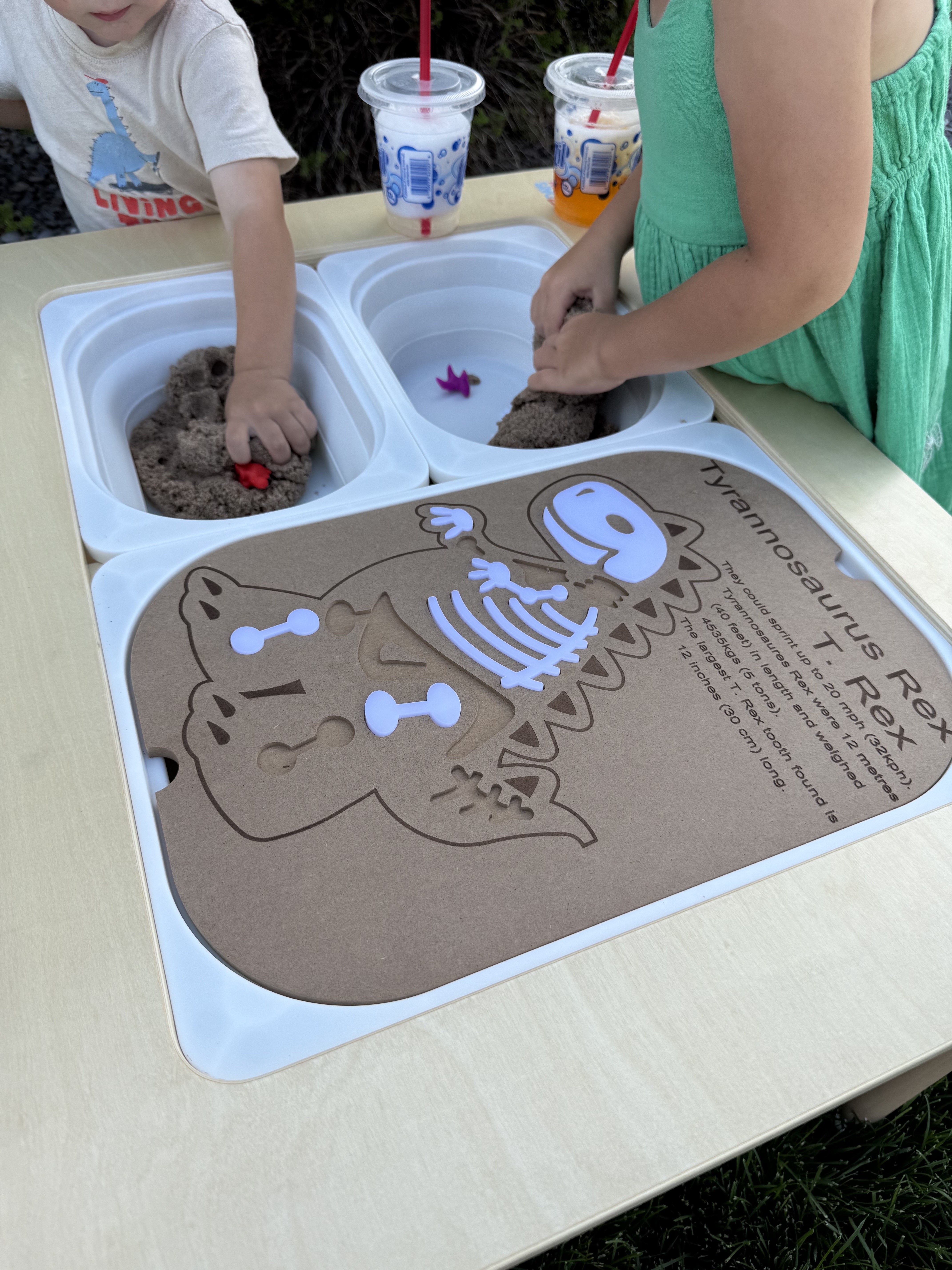
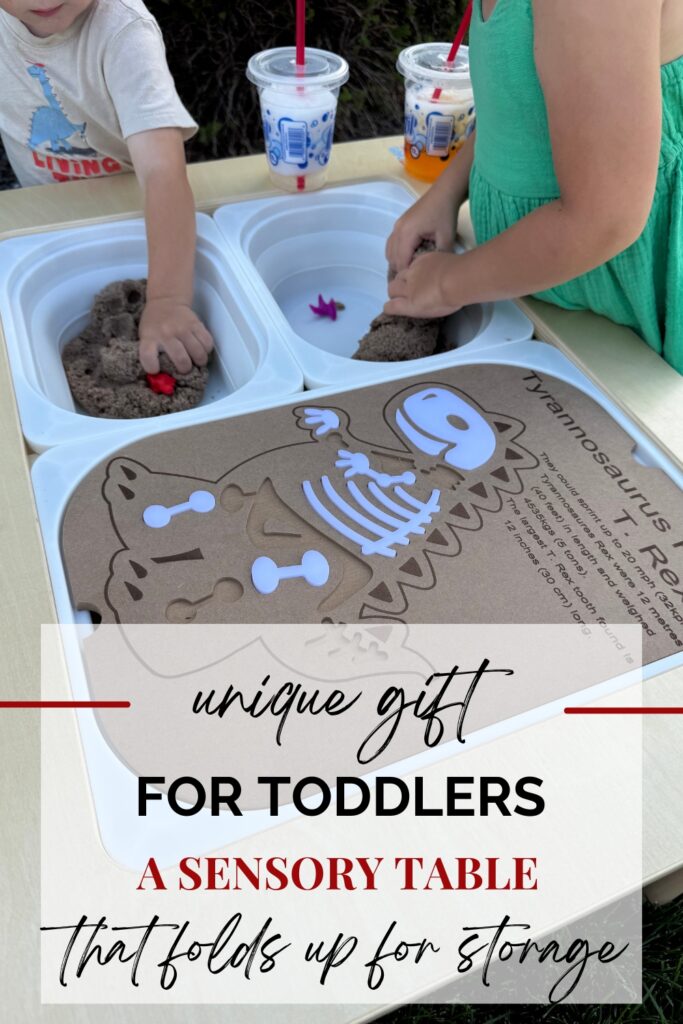
And when I saw these adorable dinosaur fossil puzzles that fit right into the sensory table (though you can totally use them without it too!), I finally took the plunge.
First Impressions & Why It’s Different
If you’re buying your first sensory table for your toddler, this is hands-down the one I’d recommend. I honestly wish I had started my kids with a sensory table earlier.
Here’s what makes this one stand out:
- Foldable legs – Perfect for small spaces, you can store it away when not in use.
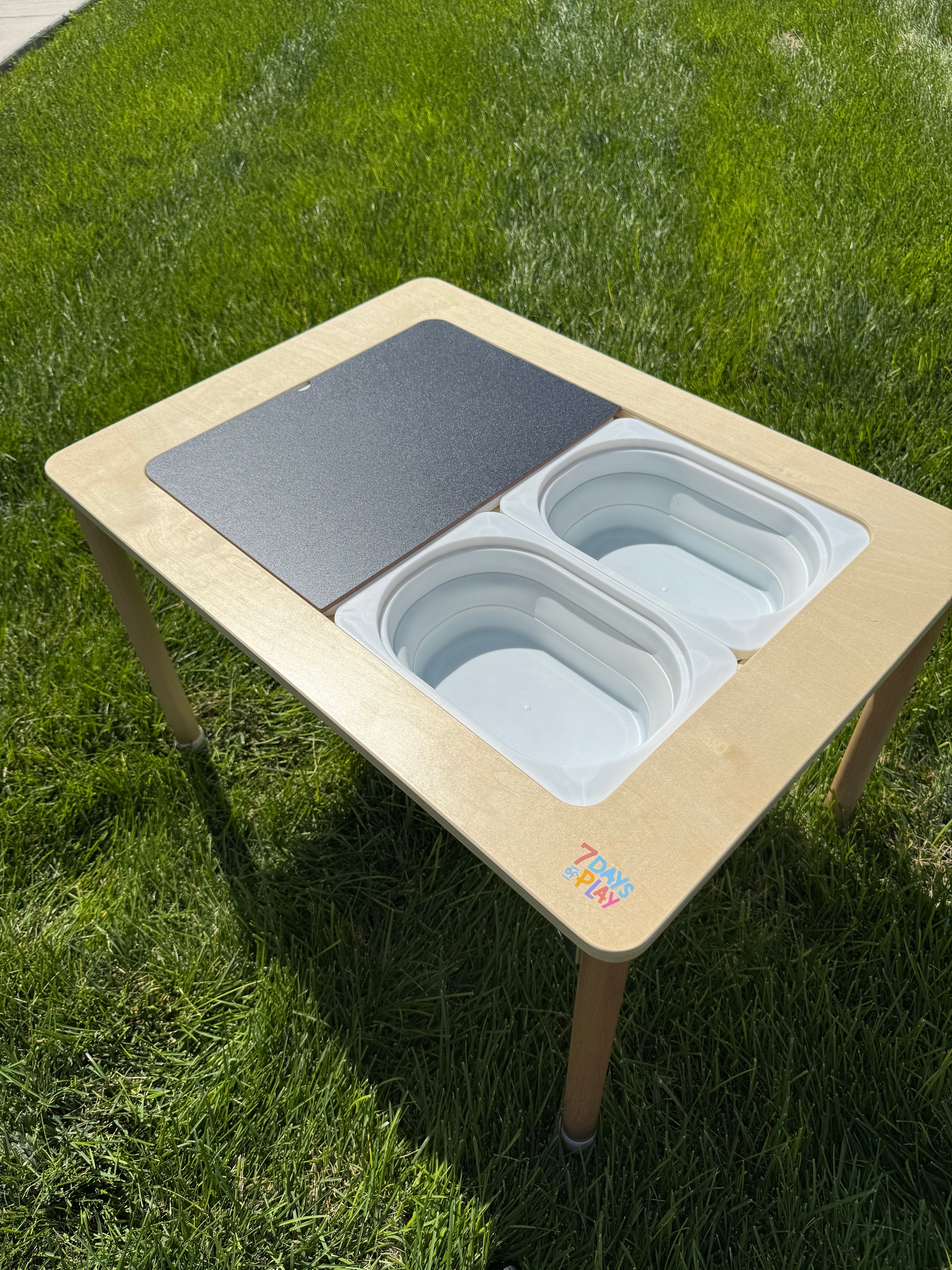
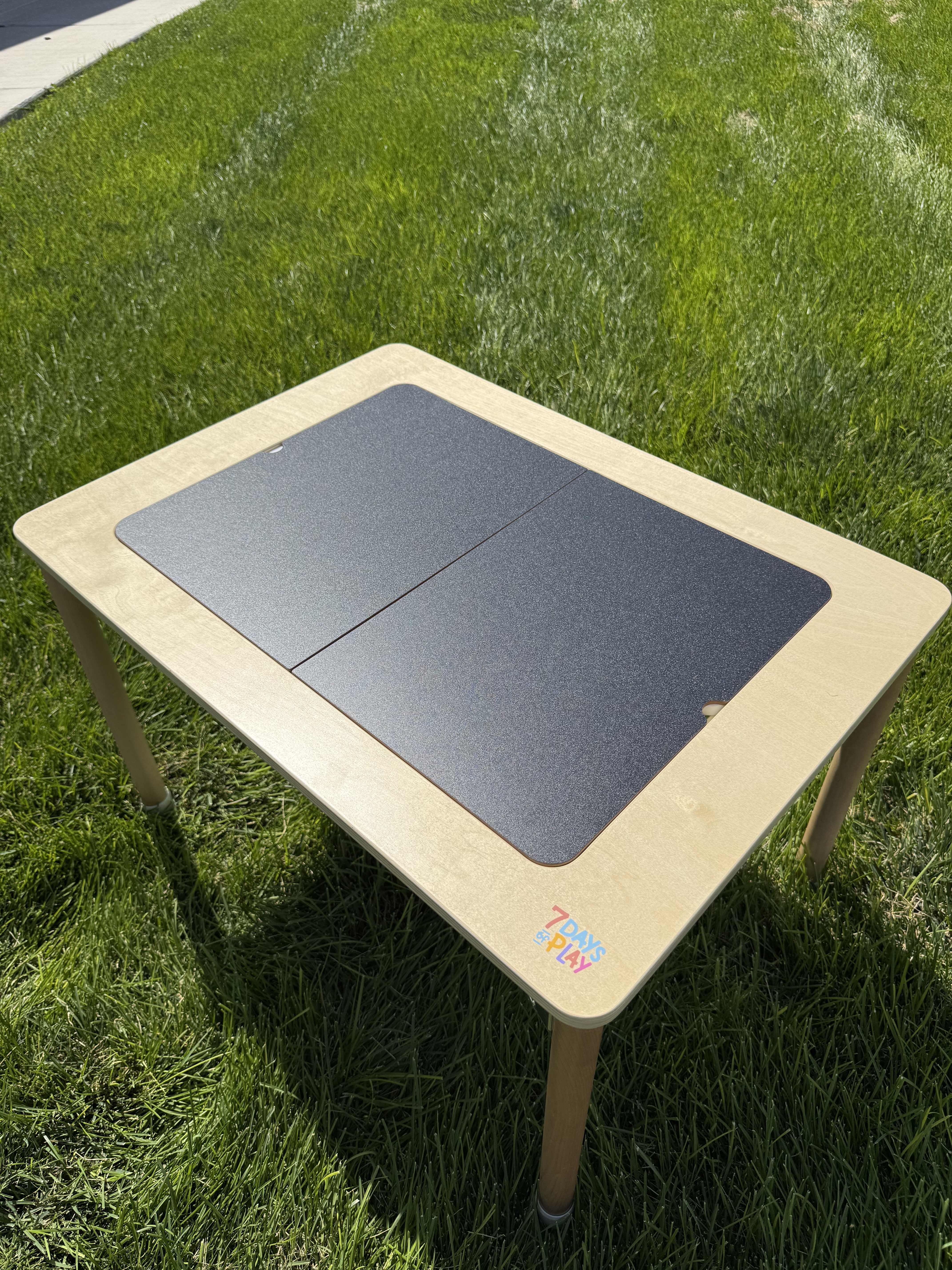
- Convertible design – It comes with pieces that cover the bins so it doubles as a regular table.
- Foldable silicone bins – Such a game changer because it allows the whole table to collapse flat and they’re easily washed.
- Durable wood – Sturdy, easy to assemble, and kid-proof.
- Easy cleaning – Just warm soapy water does the trick.
- Safety features – Rounded edges and non-skid leg protectors to keep your floors safe.
What’s Included in the Box
- Foldable table
- Three bins (one large, two small)
- Two double-sided covers (one side is a whiteboard, the other a chalkboard)
Setup was quick and easy (it’s already put together), just pop the bins in and my kids were using it right away.
Who This Table Is Best For
This table works beautifully for a wide range of ages.
- Toddlers (18 months+) – Start with simple fillers like pom poms, water, or large scoops.
- Preschoolers (3–5 years) – Add puzzles, counting activities, letter hunts, or themed bins.
- Early Elementary (6–7 years) – Use the chalkboard/whiteboard side for writing practice, or set up STEM challenges in the bins.
I love that it’s something that grows with your kids and adapts to different learning stages.
How We Use Our Sensory Table
This table has quickly become a daily staple in our house. Here are some of the ways we’ve been using it:
Dinosaur Dig Puzzle
This was the activity that inspired me to finally buy the table! The puzzle board fits directly onto one side while I hid the dinosaur “bones” in sand on the other side. My toddlers got to dig, scoop, and solve the puzzle—so much fun.
Scoop & Pour Play
My 2-year-old is obsessed with scooping, pouring, and filling. With our old table it always felt like a giant mess, but this table actually contains it pretty well. We’ve used dried beans, pasta, rice, and sand.
Creative Play & Learning
Since it doubles as a table, we also use it for:
- Chalkboard and whiteboard drawing
- Preschool letter and number practice
- Coloring pages
- Homeschool activities
- Snack time or meals
Our Favorite Sensory Fillers
One of the best things about this foldable table is how easy it makes switching out fillers. I try to rotate them to keep things fresh, and sometimes I’ll tie them to a season or holiday. Here are some of our go-tos:
- Rice – Cheap, easy to dye with food coloring, and fun for scooping.
- Dry pasta – We use bowties, shells, or macaroni for variety.
- Pom poms – Soft, colorful, and perfect for toddlers who are still learning gentle play.
- Kinetic sand – A huge favorite, especially with little scoops and molds.
- Dried beans – Great for scooping practice (just supervise closely with younger toddlers).
- Taste Safe “Water beads” – Fun texture and always a hit. Check out my blog on how to make them!
- Seasonal fillers – Plastic Easter eggs, fake snow, mini pumpkins, red/green pompoms for Christmas… it’s easy to make it festive.
- Puzzle play – I love adding puzzles (like our dino fossil set) into bins of sand or rice for an added challenge.
💡 Tip: I like keeping a few zippered pouches or plastic containers handy to store fillers between play sessions. That way, it’s easy to swap things out quickly without having to reinvent the wheel each time.
Easy Activity Rotation Ideas
One thing I’ve noticed is how much my kids love the variety this table brings. A quick switch of the bins and it feels like a brand-new setup. Here are a few of our current favorites (with more ideas coming soon!):
- Alphabet Treasure Hunt – Hide foam letters in rice or beans and have your child dig them out and match them to a puzzle board or the chalkboard.
- Seasonal Sensory Bin – Swap fillers based on the holiday (mini pumpkins for fall, fake snow at Christmas, plastic eggs for Easter, these cute ice cream cones for summer). The CAT Trucks with fake snow was a big winner over here.
- Gemstone Treasure Hunt & Sorting – I used our Seek & Splash Gems (from our summer water table play) with kinetic sand to create a fun treasure dig. My toddlers dug through the sand, then sorted the gems into colored cups. For my 4-year-old, I added the numbered version of the gems for an extra learning challenge.
💡 Sensory bins don’t need to be brand new every day. A few simple rotations with different fillers or tools can keep the play fresh without a lot of extra work. Check out my post on How to Build and Refresh a Sensory Bin for more ideas!
Our Favorite Sensory Play Tools
No sensory table setup is complete without the right tools. These are the items we reach for again and again to make play more engaging (and they’re all easy to grab on Amazon or at craft stores):
- Scoops and spoons – Perfect for practicing hand-eye coordination, pouring, and transferring.
- Measuring cups – A classic for pretend cooking or filling and dumping play.
- Small bowls or cups – Great for color sorting or organizing little treasures.
- Tongs or tweezers – Awesome for strengthening fine motor skills.
- Pipettes – Perfect for fine motor practice and water play.
- Funnels – Toddlers love watching rice, beans, or sand flow through.
- Mini muffin tins or ice cube trays – Perfect for sorting games or little sensory “stations.”
This Learning Resources set has a good mixture. This Glo Pals one is great too.
I keep a small basket of these tools right next to our sensory table so I can switch them out easily depending on the day’s setup.
Alternative Options if You’re on a Budget
I know the 7 Days of Play table isn’t the most budget-friendly option, so here are a couple of alternatives:
- Walmart Sensory Table ($55) – Comes with chairs, but the bins are built in, which might make clean-up harder as your kids grow.
- Wingzy Sensory Table ($130) – Includes two stools and bins, but the table and bins aren’t foldable. The bins are replaceable though.
That said, I personally think the 7 Days of Play version is worth the investment ($140), especially since it’s foldable, durable, and versatile. Plus, it’s supporting a small business.
Final Thoughts
If you’ve been hesitant like me, I can confidently say this table is worth it. Whether you want something you can store away when not in use or a table that can serve as your everyday play and activity space, the 7 Days of Play Sensory Play Activity Table with Foldable Legs is the best choice.
We’re already filling ours with sensory bins, puzzles, and activities, and I’ll be sharing more filler ideas as we go. Stay tuned because this little table is about to get a lot of use in our house!
More Toddler Activity Inspiration
If you’re excited about sensory play and hands-on learning, I’ve got even more fun ideas for you! Check out these posts next:
- 25 Days of Christmas Activities for Toddlers
- Activities My 2 and 4 Year Olds Can Do Together
- Simple and Educational Activities for Toddlers
You’re doing a great job.
xx, Ciara


Pingback: How to Build a Sensory Bin (Without Getting Overwhelmed) - Ciara Deanne on August 26, 2025
1 COMMENT