This post may contain affiliate links. A small commission may be earned if you make a purchase through my links. Thank you for supporting my blog!
When our kids are young, it’s easy to worry about their skill development. Sometimes we even find ourselves pushing them to do things they just aren’t developmentally ready for yet. Add in the comparison game, especially in the toddler years, and it can feel like your child is always “behind” someone else’s.
The truth is, every child develops at their own pace. There are certain stages where it’s important to seek intervention if milestones aren’t being met, but most of the time we are simply in our own heads, worrying that our kids aren’t learning fast enough.
Here’s the part we often forget: so many of the simple activities we already do with our kids daily are actually building the very skills we want them to develop. Skills like writing, cutting, balance, and coordination don’t always come from direct practice, they’re strengthened through play.
Why Simple Activities Work
You might be wondering, Why not just practice the skill itself?
The answer is: kids learn best through play. Activities are fun, engaging, and hands-on, which means your child will stick with them longer. Play allows kids to practice without the pressure of “drills” or repetition. Instead, they build positive associations with learning and confidence in their abilities.
As both a former teacher and now a mom of three, I’ve seen firsthand how powerful this can be. What looks like “just play” is actually laying the foundation for future skills like handwriting, scissor use, balance, and focus.
I’ve pulled together some of my favorite super simple activities that we’ve done at home over the years. I’ve also grouped them by recommended starting age so you can easily find activities that fit your child right now. Remember, these are guidelines, not rules. Kids grow and develop at their own pace, and you can always adapt activities to meet them where they are.
18 months+ (early toddler stage)
- Sticker Peeling – Big stickers are easiest at first. Builds pincer grasp and finger dexterity. I’ll often peel off the sticker backing to make it a bit easier but still challenging. I give my toddler a big piece of paper on the wall or floor to stick them onto.
- Playdough Pinching – Smashing, rolling, and squishing are wonderful early fine motor builders. We also love using kinetic sand with simple tool kits like [this one from Learning Resources].
- Sorting (large items) – Simple color or size sorting with chunky items like blocks or balls builds visual discrimination and early math skills.
- Scooping & Pouring Water – Using cups or pitchers to scoop and pour builds coordination, patience, and confidence with practical life skills.
- Animal Walks – Walking like different animals (bear crawl, crab walk, frog jump) builds coordination, strength, and motor planning.
- Balloon Play – Think “Keepy Uppy” from Bluey! Balloons float slowly enough to make hand-eye coordination practice fun and frustration-free.
- Chalk on the Sidewalk – Big, sweeping arm movements are perfect for gross motor and pre-writing strokes.
- Painting – Large paintbrushes, finger painting, or foam rollers. At this age, it’s all about exploration and sensory play. One of my favorite low-mess hacks: let your toddler “paint” with water on construction paper. The paper still changes color, but you don’t have to scrub paint out of clothes later.
2 years+ (developing control and coordination)
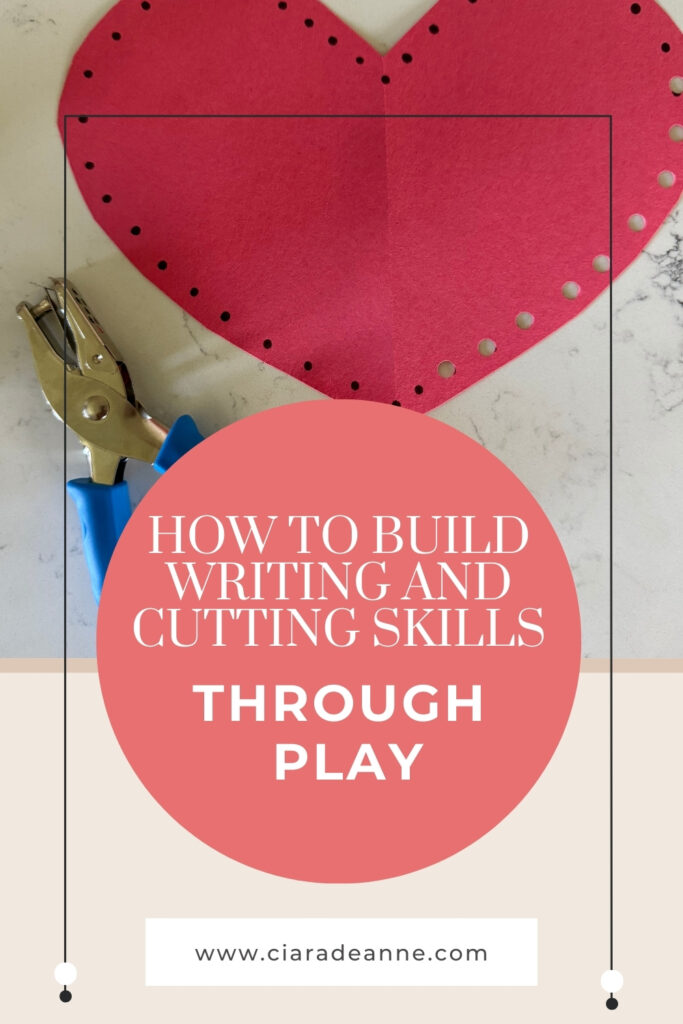
- Hole Punching – Start with thin paper; this builds hand strength and prepares for scissor skills. I sometimes add dots or shapes around the edges for extra hand-eye coordination practice. The smaller hole punch in this pack is great for smaller hands!
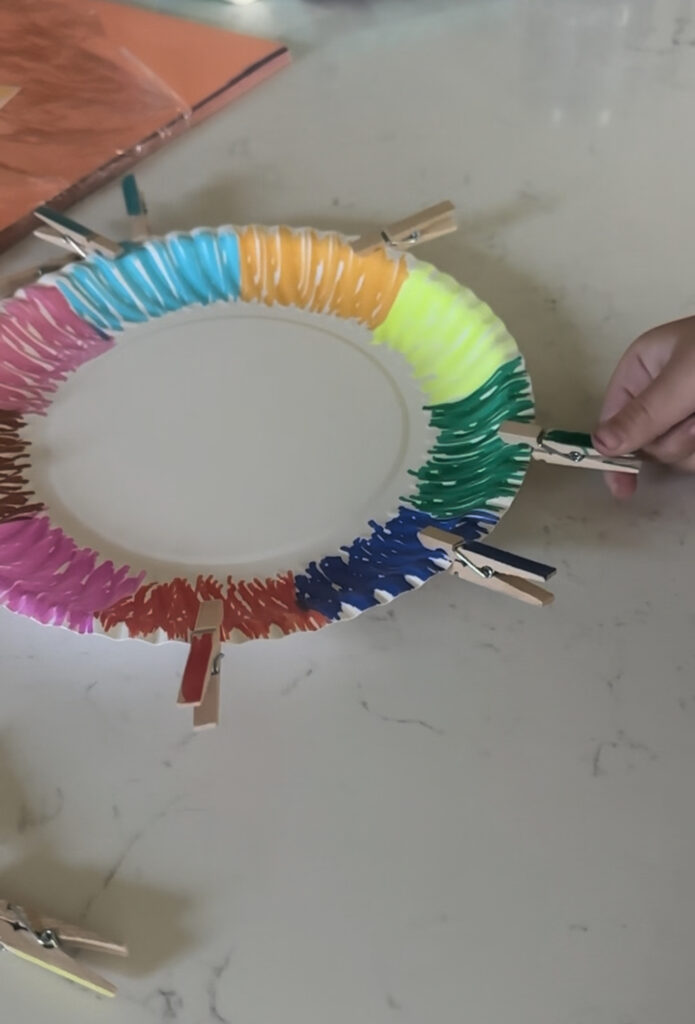
- Clothespin Play – Pinching clothespins strengthens grip and finger muscles. Add in a color-matching twist by coloring the pins and having your child match them to a paper plate.
- Pom-Pom Transfer with Tongs or Spoons – Transferring items with tools develops hand strength and coordination. Try sorting pom-poms into different colored cups for an added challenge.
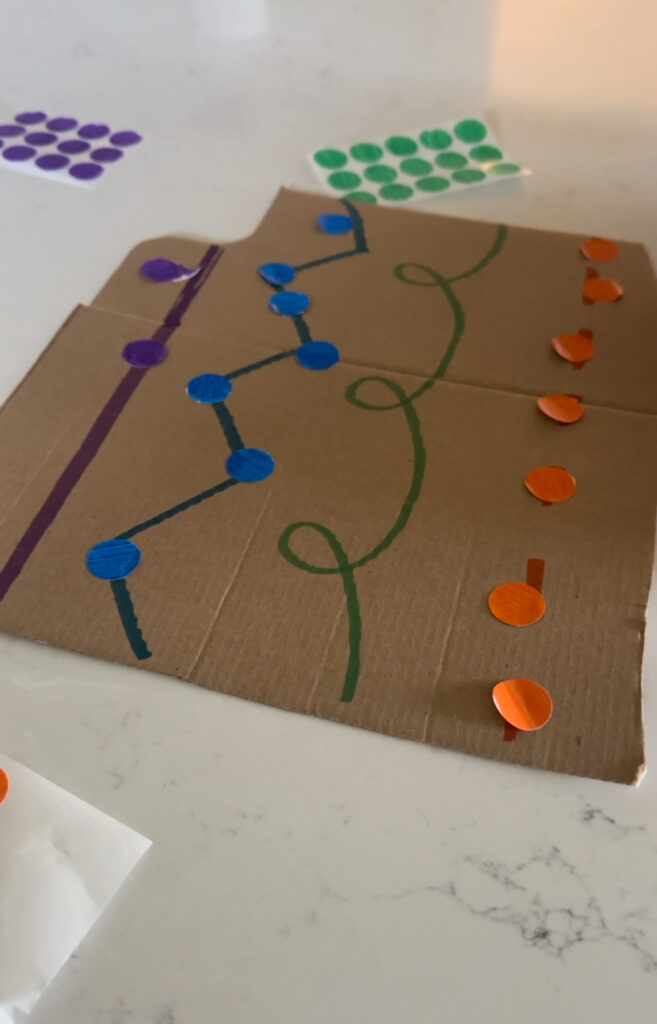
- Sorting (smaller items) – Use beads, buttons, or small toys for more precision. One variation we love: color sorting dot stickers onto matching papers.
- Tracing with Cars – Draw simple roads with tape or markers and have your toddler “drive” along them. This encourages focus, control, and pre-writing strokes.
- Painting with More Intention – By this stage, kids can start experimenting with smaller brushes, dot markers, or stampers. They’ll begin making shapes and intentional marks.
2.5–3 years+ (refining fine motor and bilateral skills)
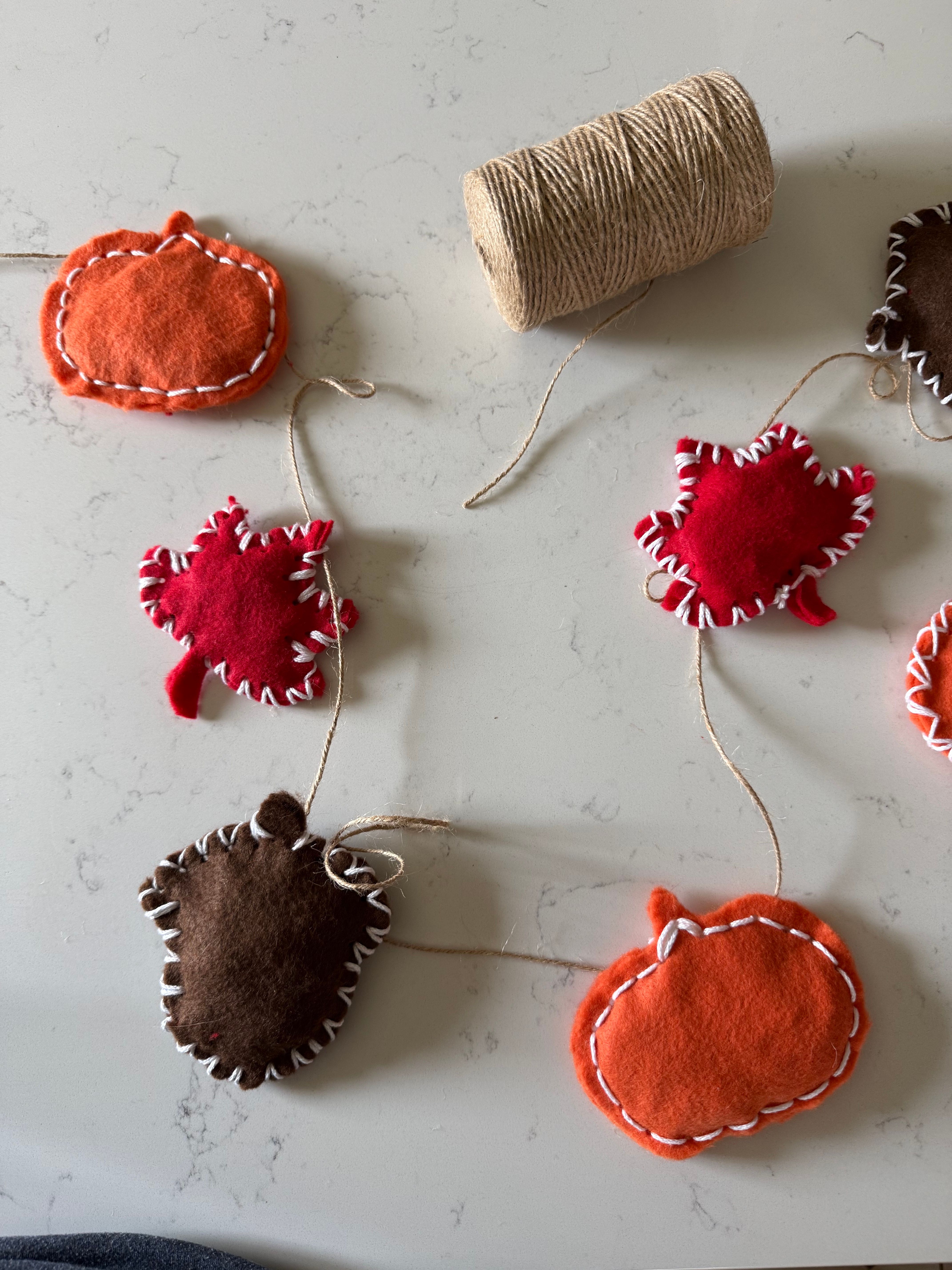
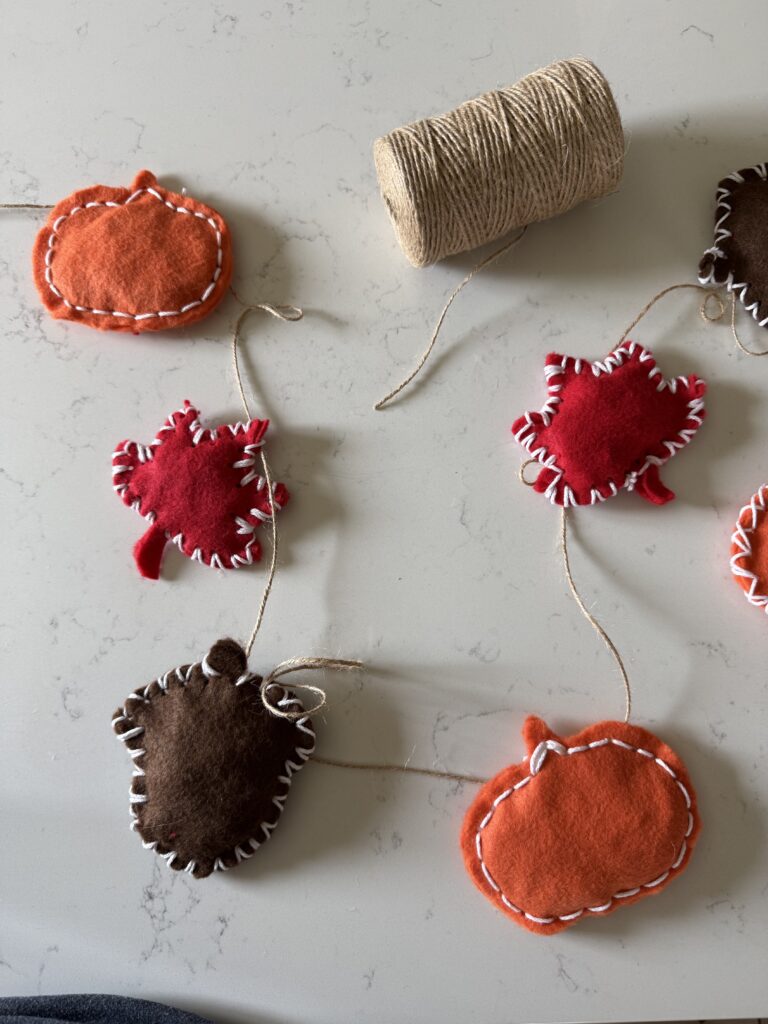
- Lacing Cards / Pasta on Pipe Cleaners – Threading builds bilateral coordination and precision. My 4-year-old recently used these same skills while “sewing” her own holiday garland — it’s so fun to see the progression!
- Q-Tip Painting – Small, controlled movements with Q-tips are perfect for building pincer grasp, focus, and hand control.
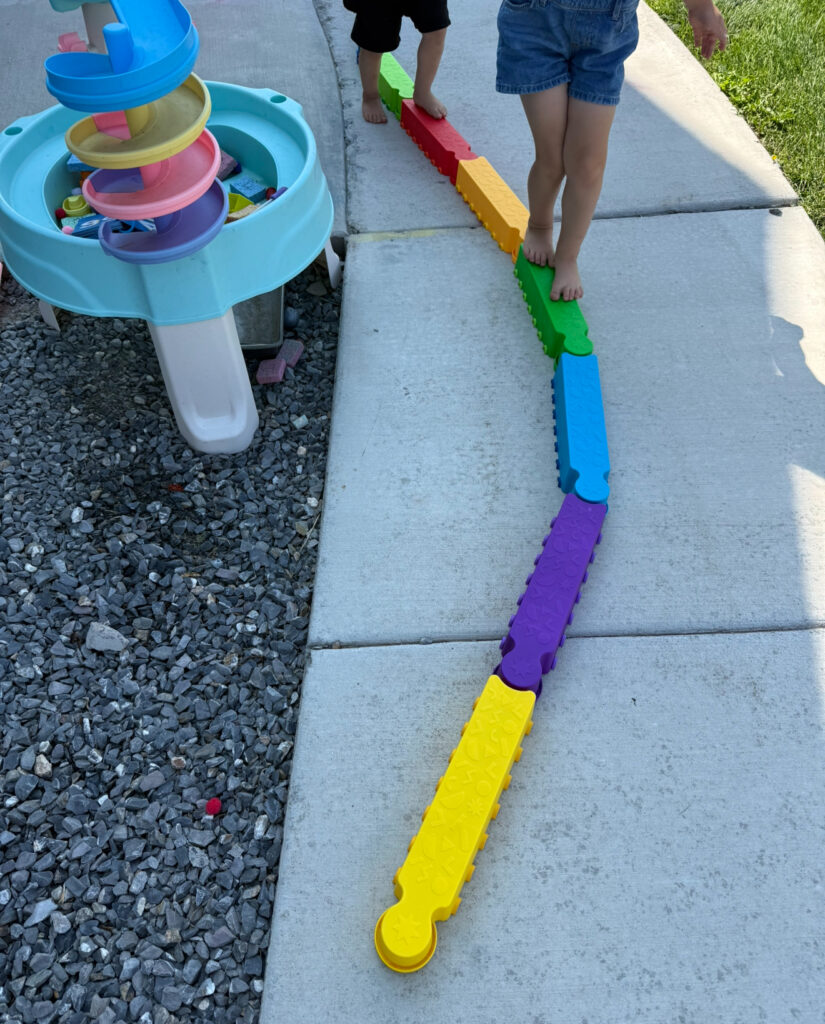
- Painter’s Tape Lines – Tape a “tightrope” on the floor for balance and core strength. We also love using our Busy Beams from Battat for balance practice — they’re so easy to set up and store.
- Painting (refined tools) – Use Q-tips or fine brushes for more detailed work. This stage is all about precision, hand control, and early writing strokes.
4 years+ (preschool and beyond)
- Hole Punch Challenges – Take hole punching to the next level by having your child punch along a line, around shapes, or through scrap paper to create “confetti” for crafts. This strengthens hand muscles and builds endurance for writing.
- Scrap Paper Scissors Bin – Keep a small bin of leftover wrapping paper, old magazines, or colorful scraps and let your child cut freely. Scissor work builds bilateral coordination (one hand cutting, one hand holding) and improves control.
- Tracing Practice – Tracing simple shapes, paths, or letters helps refine hand-eye coordination and early writing strokes. Keep it playful, you can use cars on “roads,” trace over highlighter marks, or connect dots instead of worksheets.
- More Complex Lacing/Weaving – Move from simple threading to weaving ribbons through cardboard slits or lacing shoes. These activities build patience and problem-solving as well as fine motor precision. Our Fall Garland is the perfect activity at this age and beyond! We have a Christmas one coming too.
- Directed Drawing – Follow simple step-by-step drawings together (like drawing a house or flower). This builds sequencing skills, attention, and early drawing confidence. We love the Yoto Player for this too. They have drawing cards where they give directions on how to draw different objects!
A Few Final Thoughts
These age ranges are simply a guideline. If your child isn’t quite ready for an activity in their “age group,” that’s okay. One of the most important lessons I’ve learned as both a teacher and a parent is to let kids take the lead.
If it’s your first time setting up activities, give it time. Your child might not dive in right away — don’t be discouraged. I’ve found that leaving the activity out and offering it again later (or the next day) often works wonders. And the more consistent I am about setting up little invitations to play, the more my kids look forward to them.
Most importantly: keep it fun, lighthearted, and pressure-free. That’s when real learning happens.
You’re doing such a great job, don’t forget it.
xx, Ciara